

Setting up a Self Managed Super Fund gives you direct control over your retirement strategy. Many Australian trustees use this structure to hold physical assets rather than just standard shares or cash. You might purchase artwork, rare coins, or precious metals to diversify your portfolio. Buying a tangible asset is only the first part of the process. You then have to figure out exactly where to put it.
The Australian Taxation Office monitors SMSF operations closely. They have strict guidelines on how fund assets must be handled. If you get the storage component wrong, you risk severe financial penalties and the potential loss of your fund’s complying status. The storage decision generally comes down to using a professional vault facility or finding a secure spot at your residential address.
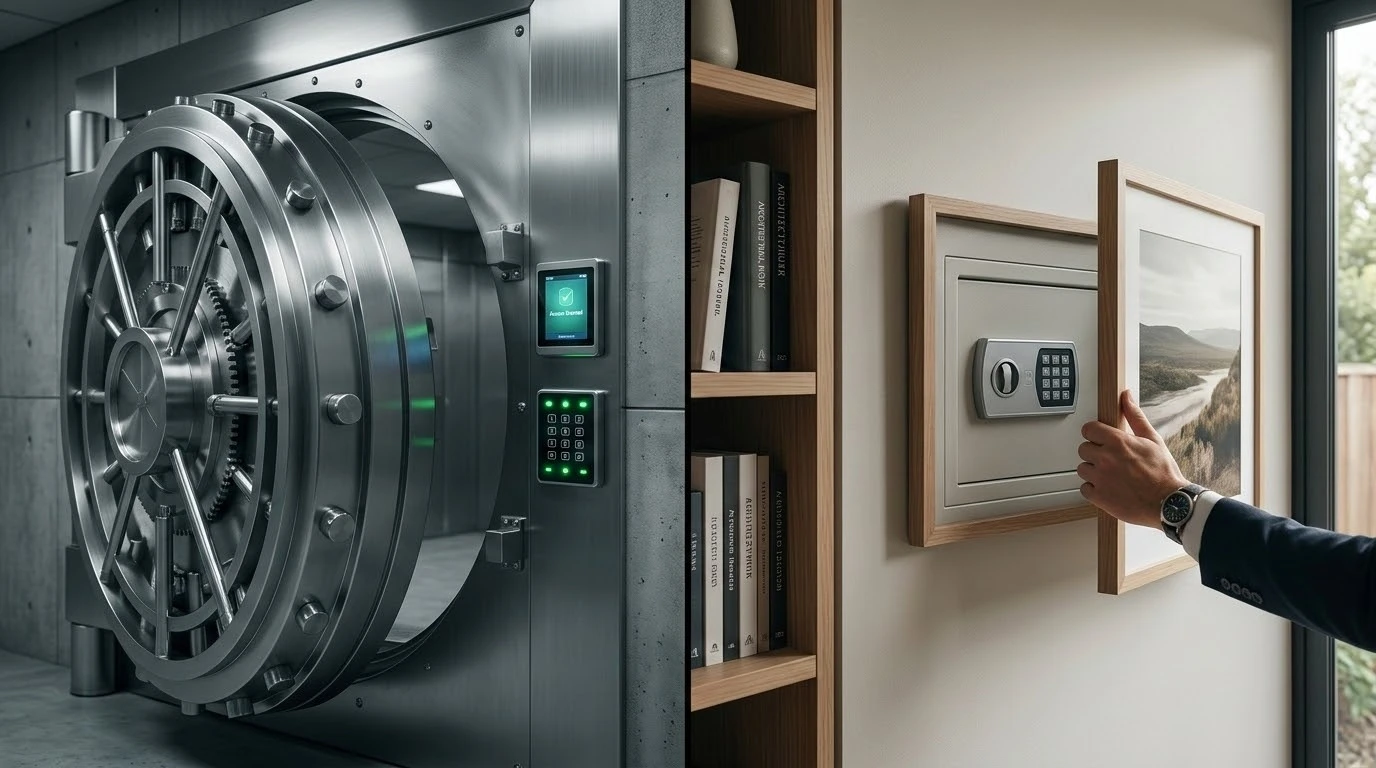
Rules for physical SMSF assets
Every decision you make for your fund must satisfy the sole purpose test. This means your fund must be maintained for the absolute sole purpose of providing retirement benefits to its members.
You can’t derive any current day benefit from an asset owned by your super fund. If your SMSF buys artwork, you can’t hang it in your living room. If it buys vintage wine, you can’t keep it in your personal cellar where it might be accidentally consumed. This creates a massive compliance burden when you decide to store physical assets at your house.
The ATO requires trustees to maintain strict separation between personal property and fund property. When you keep fund assets at home, you inherently blur that line. You have to work twice as hard to prove you are not gaining a personal advantage from the arrangement.
Understanding the annual audit
Every SMSF must undergo an annual audit by an approved independent auditor. This is an intensive review process. The auditor is legally required to verify the existence, ownership, and market value of every single asset in the fund.
When assets are stored at home, the auditor’s job becomes incredibly difficult. They can’t simply take your word that the items are sitting securely in a safe in your garage. They need concrete evidence to sign off on the financial statements. You might be required to provide date stamped photographs, sign statutory declarations, or even arrange a physical inspection of the safe.
This back and forth adds significant time to the audit process. More time spent by the auditor translates directly into higher accounting fees for your fund. If the auditor isn’t completely satisfied with your home storage arrangements, they must lodge an Auditor Contravention Report with the ATO.
The appeal of home storage
It’s completely understandable why trustees consider keeping assets at home. You avoid paying ongoing storage fees to a third party facility. You also maintain direct physical control over your investments, which is often the primary reason people set up an SMSF in the first place.
Executing home storage properly requires a significant upfront investment. You can’t just leave fund assets in a bedside drawer or a cheap lockbox. You need a high security safe installed by a professional. The safe usually needs to be bolted directly to a concrete slab and carry a specific cash rating to satisfy both the ATO and your insurance provider.
Once you factor in the cost of buying and installing a suitable safe, the perceived savings of home storage quickly disappear. You also take on the permanent responsibility of maintaining the physical security of that safe against fire, theft, and water damage.
Why professional vaults make sense
Using a commercial vault facility is the cleanest way to handle physical assets. It removes the operational ambiguity that comes with keeping things at your house. A vault acts as an independent custodian for your retirement savings.
When you invest in Gold Bullion in a SMSF, a professional vault provides a seamless compliance trail. The facility issues regular holding statements and independent valuation reports. Your auditor can rely entirely on these third party documents. They don’t need to interrogate you about access logs or storage conditions.
The documentation provided by a professional storage facility saves hours of administrative work during tax time. You simply hand the holding statements to your accountant and the audit requirements are largely satisfied.
Insurance realities and holding costs

Insurance is the hurdle where home storage usually falls apart for SMSF trustees. Your standard residential home and contents insurance policy will almost certainly exclude assets owned by a superannuation fund.
You have to purchase a standalone insurance policy specifically for the fund assets kept at your house. These residential policies are notoriously expensive. Insurers know that residential security systems are rarely on par with commercial facilities. The underwriting risk for home storage is extremely high, and the premiums reflect that risk.
Commercial vaults benefit from massive economies of scale. They utilize round the clock security personnel, advanced biometric access controls, and enterprise grade physical infrastructure. Because of this heavy security investment, their insurance premiums are heavily discounted.
Most professional storage facilities include comprehensive insurance coverage in their standard monthly storage fee. When you compare the total annual cost of private residential insurance against commercial vault fees, the vault is almost always the more cost effective option.
Separating personal and fund assets
A core principle of SMSF management is keeping fund assets completely separate from your personal assets. Blurring the lines is a quick way to attract unwanted regulatory attention.
Having fund assets physically located inside your personal residence makes this separation difficult to demonstrate. Even if you buy a dedicated safe strictly for the fund, the physical proximity creates regulatory friction. You still have to prove that no other family members have the code or the keys.
A professional vault creates immediate physical and legal distance. There is zero risk of you accidentally mixing personal items with fund property. Access is strictly controlled and logged by the facility. If the ATO ever questions your storage arrangements, you can point to the vault’s access logs as proof that the assets are secured and untouched.
The final storage decision
Holding tangible assets in your superannuation fund requires a strong administrative foundation. The storage method you choose dictates how much time you will spend dealing with accountants, auditors, and insurance brokers every single year.
Home storage might feel like the ultimate form of control. But is the administrative headache actually worth it? In reality, it just shifts the entire burden of proof onto your shoulders. You become responsible for security, separate insurance, and proving compliance to a skeptical auditor.
Vault storage outsources the compliance requirements to a facility built specifically for that purpose. It provides the paper trail your auditor needs and the security your insurance company demands. For trustees who want to focus on their investment strategy rather than administrative paperwork, professional storage is the clear operational choice.
