
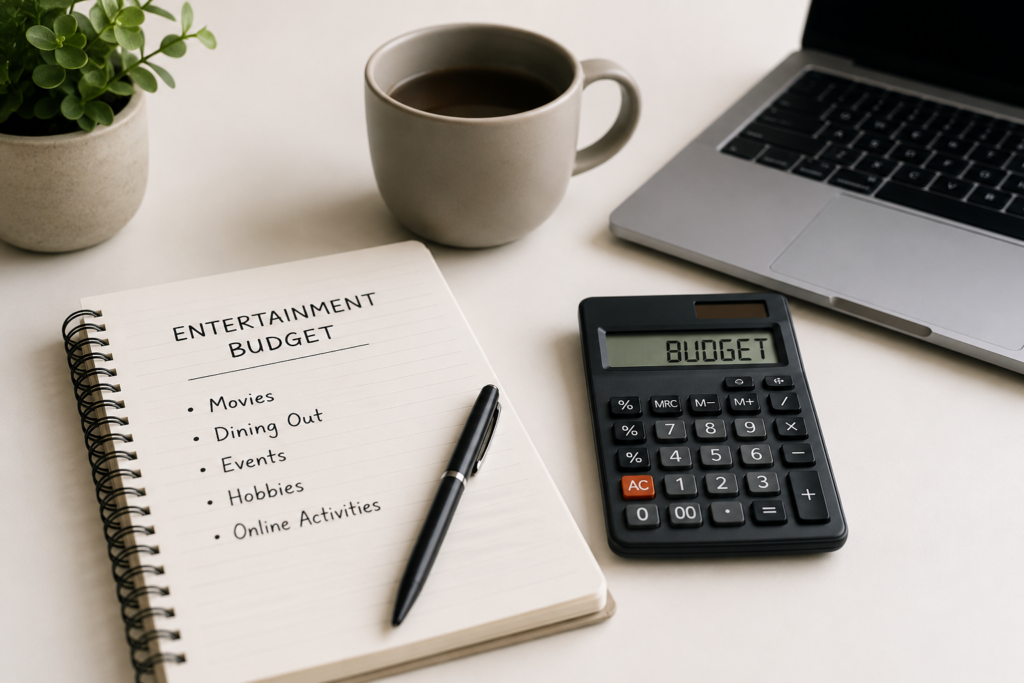
A business owner can be exact with supplier dates, payroll, tax money, and loan repayments, then vague about personal entertainment. That gap creates confusion. Leisure needs a clear boundary. It becomes harder to read when it drifts through the same mental space as business cash flow.
The cleanest approach is to treat entertainment as a named personal category, not a mood purchase. A PLOS ONE study on mental budgeting and self-control links those habits with stronger financial well-being, which supports a simple point for owner-managers: money feels easier to direct when it has a job before the moment arrives. The same mindset sits behind good cash flow forecasting: you are not trying to predict every detail, just creating visibility to act more calmly.
Put the Leisure Pot Before the Activity
Once the personal amount is set, the entertainment choice becomes easier to judge. A person might prefer a film, a sports match, a paid game, a class, or a structured digital poker format. For example, poker tournaments online can be understood as a scheduled leisure option where the activity is organized around tournament timing, table play, and defined event formats, rather than open-ended browsing.
That makes the budgeting lesson straightforward: decide the personal pot first, then choose whether the format fits both your time and your entertainment limit. Ignition’s poker
tournament page describes online tournament play, including Hold’em, Omaha, Omaha Hi/Lo,Sit & Go events, jackpot Sit & Go events, knockout tournaments, satellites, and scheduled tournaments. For a business owner comparing leisure formats, looking at poker tournaments online can provide context for seeing how a time-bound activity is structured before deciding whether it belongs in the monthly entertainment category. The important habit is separation. The business part of your brain stays focused on obligations, working capital, and planning. The downtime part considers hobbies and enjoyment. Separating the two can improve your work- life balance and ensure you’re putting enough thought into your relaxation moments.
The social layer also matters. Ignition’s Instagram post about its Discord community shows how online poker can extend beyond the event itself into updates, shared spaces, and community prompts. Many leisure activities now come with group chats, channels, reminders, and event notices. Those touchpoints make a hobby engaging, so the spending and time boundary should be clear before the social side starts shaping attention. https://www.instagram.com/p/DW42pgYjNOR/
Why Founders Blur Business and Personal Spending
Business owners often spend a lot of time thinking about the numbers. They focus on customer payments, equipment costs, staffing, stock, and marketing together. Personal spending can slip into that same mental dashboard because the owner is used to solving everything from one place. That can make entertainment feel harder to assess.
The issue is unclear classification. If an owner does not know whether leisure money has been planned, every optional spend becomes a judgment call. Judgment calls are tiring when the working day has already been full of them. A fixed entertainment category reduces friction because the decision has been made at a calmer time.
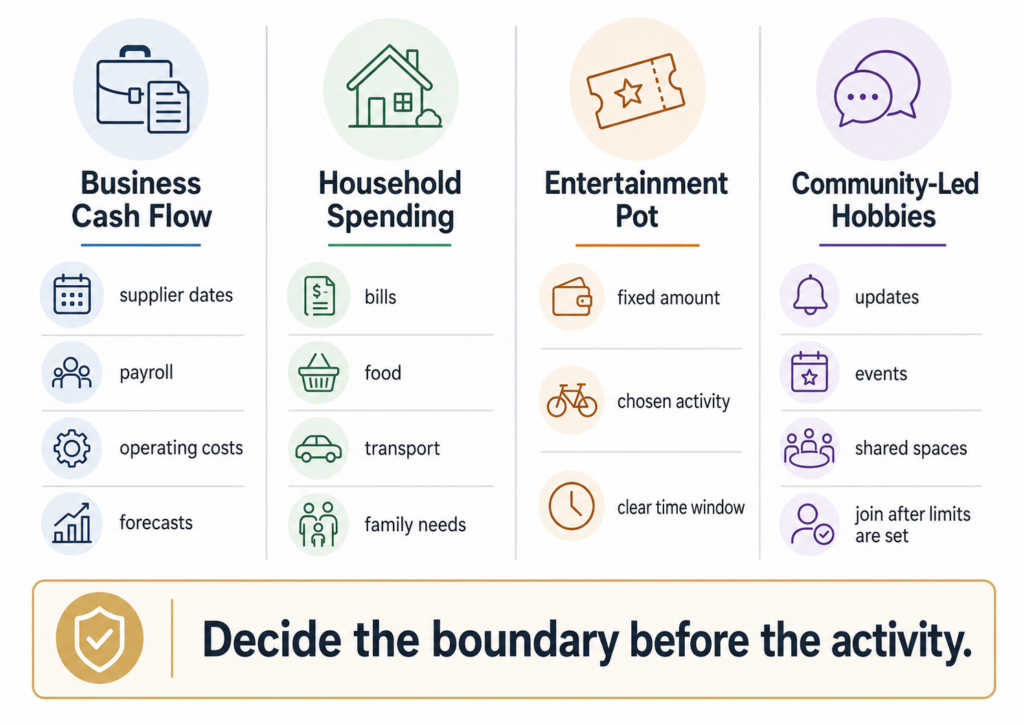
Here is a simple way to read the difference:
| Spending Area | Main Question | Good Boundary |
| Business cash flow | What must the company cover soon? | Forecasted payments, buffers, and operating costs |
| Household spending | What keeps daily life stable? | Housing, food, bills, transport, and family needs |
| Entertainment | What helps me switch off within reason? | A fixed personal amount and a clear time window |
| Community-led hobbies | What events or updates might draw attention? | Join after the leisure budget and schedule are set |
Money becomes easier to handle when every category has a role. Entertainment does not need o justify itself as productive. It only needs to sit in the right place.
Time Is Part of the Budget
Many owners focus on the cash amount and forget the time cost. A modest hobby can still be a poor fit if it doesn’t balance well with other obligations. A small event can feel more
rejuvenating if it has a clear start, a clean finish, and enough enjoyment to make the break feel real.
Time-bound entertainment helps because it creates an ending. A scheduled class, film, match, tournament, or live event does not need constant renegotiation. You know when it starts, what it involves, and when to return to normal routines. Open-ended entertainment keeps presenting one more option, one more upgrade, one more notification, or one more hour.
This is why the best personal rule often combines two numbers: an amount and a window. “This much this month and two evenings a week” is more useful than “keep it sensible.”
The Monthly Review That Keeps It Human
The review should be short. Look back once a month and ask which activities helped you properly switch off, which ones felt automatic, and which ones you would happily skip next time. That reflection is more useful than tracking every small purchase.
A strong entertainment budget gives downtime a clean lane, so business cash flow, household needs, and personal enjoyment stop competing in the same mental space. The owner gets a clearer view of the company, and leisure keeps its role as recovery, interest, and connection. That balance matters because everyday spending choices are often shaped by personal strategies that fit the individual, a point supported by open-access research on financial self-control strategies.
