
Even just a single late payment or cash flow gap can create a massive ripple across an entire supply chain. Suppliers may struggle to cover operating costs. Buyers may feel pressure to pay sooner than planned, reducing their own liquidity. It can cause a lot of problems for a lot of businesses and people.
Supply Chain Finance (SCF) is designed to solve those problems. Also known as supplier finance or reverse factoring, it’s a buyer-driven, technology-enabled cash flow solution that helps suppliers get paid early (often at more competitive rates) while allowing buyers to extend payment terms without damaging relationships.
In other words, it’s a way to optimise working capital for both sides and keep the supply chain running smoothly as an alternative to something like a business loan or trade finance.
In this article, we’ll look at how:
- Supply Chain Finance addresses payment and cash flow gaps between buyers and suppliers, optimising liquidity and sustaining a smooth operational flow in the supply chain.
- SCF offers a technological, buyer-driven cash flow solution, enabling suppliers to receive early payments while allowing buyers to extend payment terms, which balances the financial needs of both parties.
- It involves trust, technology and precise timing to facilitate early payment and extended terms without disrupting the operational flow of the supply chain.
How Supply Chain Finance Works
Supply Chain Finance is built on three essential pillars:
- Trust: The funder must trust the buyer’s ability and commitment to pay at a later date.
- Technology: A digital SCF platform is the hub where invoices are approved, financing is offered and payments are tracked.
- Timing: Early payment for suppliers and extended payment terms for buyers both depend on a precise sequence of actions.
This structure ensures all parties (buyers, suppliers and funders) benefit without disrupting the supply chain’s operational flow.
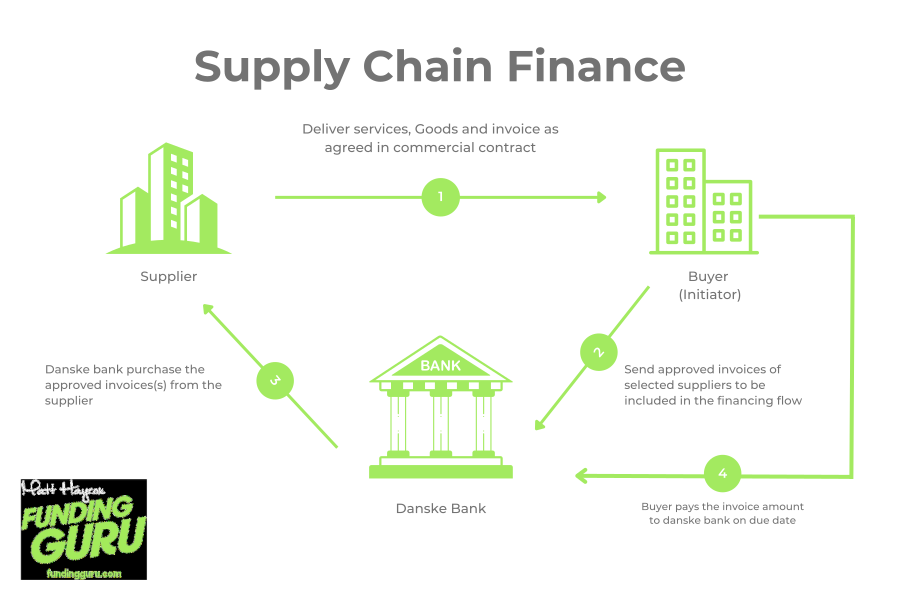
The Supply Chain Finance process follows these four steps:
Step 1: Buyer Approves the Invoice
The SCF process begins when the buyer confirms that goods or services have been delivered according to the agreed terms.
This approval is usually done within a dedicated SCF platform or an integrated ERP system. At this point, the invoice becomes an asset backed by the buyer’s credit rating, which is critical to the financing arrangement.
Step 2: Supplier Is Invited to Participate
Once the invoice is approved, the supplier is invited to join the buyer’s SCF programme.
Suppliers can opt in on an invoice-by-invoice basis or for all eligible transactions. The invitation often includes clear terms, showing the discount rate for early payment and the exact funding timeline.
Step 3: Early Payment via a Funder
If the supplier chooses early payment, a third-party funder, such as a bank, multi-bank platform or independent financier, steps in.
The funder pays the supplier within days, and sometimes in as little as 24 to 72 hours. The financing cost is typically based on the buyer’s stronger credit profile, which means lower interest or discount rates than traditional invoice finance.
Step 4: Buyer Settles with the Funder Later
The buyer then pays the funder on the extended payment due date, which can be anywhere from 30 to 120 days after invoice approval.
This allows the buyer to hold onto their working capital longer without straining supplier relationships. The transaction is often structured so that it doesn’t appear as debt on the buyer’s balance sheet.
Why This Works: Credit Leverage and Risk Mitigation
This arrangement works because the funder’s risk is tied to the buyer’s creditworthiness, not the supplier’s.
- For suppliers: They gain fast access to funds without the high cost of factoring or unsecured loans.
- For buyers: They get longer to pay, improve cash flow and maintain goodwill with suppliers.
It’s a win-win. It ensures improved liquidity for both sides and a more resilient, collaborative supply chain.
Key Benefits of Supply Chain Finance
SCF is a strategic tool for liquidity management, relationship building and operational efficiency. This means there are huge benefits for both sides.
For Buyers
Buyers often face the challenge of balancing supplier goodwill with their own working capital needs. SCF offers the best of both worlds:
- Extended payment terms without jeopardising supplier relationships.
- Strengthened partnerships by ensuring suppliers have reliable cash flow.
- Reduced risk of supply chain disruption thanks to financially stable suppliers.
For Suppliers
For suppliers (especially SMEs), cash flow stability can make or break growth. SCF delivers:
- Faster access to funds, which improves operational agility.
- Lower financing costs than traditional invoice finance, thanks to the buyer’s stronger credit profile.
- Improved cash flow visibility and reduced Days Sales Outstanding (DSO).
Strategic and Operational Benefits
Beyond the obvious cash advantages, SCF can:
- Enhance balance sheet efficiency, particularly for buyers (off-balance-sheet potential).
- Unlock deeper liquidity optimisation across the entire value chain.
- Support automation and digital invoicing, improving Procure-to-Pay (P2P) workflows and reducing administrative overhead.
SCF vs Traditional Trade Finance
While both SCF and traditional trade finance aim to strengthen cross-border trade, they serve different purposes:
- Trade Finance instruments, like Letters of Credit or Bank Guarantees, focus on risk mitigation and ensuring secure payment in new or high-risk international transactions.
- Supply Chain Finance is liquidity-centric and designed for established supplier relationships, enabling smoother ongoing trade by optimising cash flow for both sides.
If you’re managing repeat, high-volume supply chains, then you’ll probably find that SCF is the better fit. If you’re entering a risky or unfamiliar trade, traditional trade finance offers the security you need.
Typical Structures and Platforms
Supply Chain Finance can be implemented in several ways, depending on how much control the buyer wants, the complexity of the supply chain and the availability of funding partners.
1. Buyer-Managed Platforms
In this model, the large corporate buyer sets up and operates its own SCF programme in-house, often using dedicated software and a team to manage supplier onboarding and payments.
How it works: The buyer contracts directly with suppliers, manages the technology platform (either developed internally or licensed from a fintech provider) and may fund the programme using its own balance sheet or by partnering with one or more banks.
Who it’s for: Large enterprises with significant procurement volume and the internal resources to manage compliance, technology and supplier communications.
Example: Major global retailers such as Carrefour or Walmart use buyer-managed SCF to strengthen supplier relationships while optimising their working capital.
2. Bank-Proprietary Platforms
Here, a single bank provides both the funding and the technology platform. Suppliers access early payment through the bank’s system once the buyer approves invoices.
How it works: The buyer signs an agreement with a bank, and the bank onboards suppliers into its own proprietary platform. The bank funds early payments based on the buyer’s creditworthiness, and the buyer repays the bank at the agreed term.
Who it’s for: Mid-to-large companies that want a solution without building their own infrastructure, and that are happy to work with a single financial institution.
Example: Corporations such as Carlsberg and Boeing have partnered with banks to deliver SCF through bank-run platforms, leveraging the bank’s global reach and compliance capabilities.
3. Multi-Bank or Third-Party Platforms
Independent fintech or specialist providers operate the platform, connecting buyers, suppliers and multiple funders in a single environment.
How it works: The platform acts as a neutral hub, onboarding suppliers from around the world and offering them early payment from a pool of banks, institutional investors or alternative finance providers. This structure reduces dependency on a single funder and can scale rapidly as supply chains grow.
Who it’s for: Companies of all sizes that want flexibility, competitive funding rates and a technology-first approach.
Example: Platforms like PrimeRevenue, Taulia and Demica have enabled thousands of suppliers to receive early payments from multiple funders, often in multiple currencies and jurisdictions.
Choosing the Right Model
Choosing the right SCF model depends on your company’s size, the complexity of your supplier network and your funding needs.
Large, well-resourced corporations often favour buyer-managed platforms because they offer the most amount of control over the process and relationships. Businesses that want a straightforward, turnkey solution tend to go for bank-proprietary platforms, benefiting from a single provider’s technology and funding. And companies looking for greater flexibility, scalability and access to competitive funding rates often find multi-bank or third-party platforms the most suitable choice.
Challenges and Considerations
While SCF offers plenty of benefits, it’s not without challenges:
- Supplier onboarding can be time-consuming, especially when the know your customers (KYC) requirements are strict.
- Limited capital from traditional banks can restrict programme scale, especially in emerging markets.
- Exclusion of smaller suppliers is a risk if the programme focuses only on high-volume partners.
Addressing these challenges often involves working with an experienced broker or multi-bank platform to ensure broad accessibility and smooth integration.
When to Use SCF vs Trade Finance
1. You have trusted, long-term supplier relationships
SCF works best when you already have strong, ongoing relationships with your suppliers. Both sides understand each other’s capabilities, pricing and delivery standards, so the arrangement focuses purely on improving cash flow rather than mitigating trust issues.
Example: A retail chain with the same clothing manufacturer for five years uses SCF to pay them within a few days of invoice approval, even while extending its own payment terms to 90 days.
2. You want to extend payment terms without damaging supplier relationships
If you need longer to pay but don’t want to strain suppliers’ cash flow, SCF offers a win-win. The supplier gets paid quickly (by the funder), while you retain cash longer for other priorities.
Example: An electronics distributor extends its payment terms from 60 to 120 days to free up working capital for marketing, but its suppliers still receive payment within 48 hours through SCF.
3. You need to improve liquidity across the entire supply chain quickly
SCF is an excellent tool for stabilising your supply chain in volatile periods, ensuring no supplier is forced into slow production or stock shortages due to cash flow gaps.
Example: A food manufacturer uses SCF during a raw material price surge so suppliers can keep producing without taking on expensive short-term loans.
When Trade Finance Is the Better Option
1. You’re entering a new market or working with a new supplier
When trust hasn’t yet been built, Trade Finance ensures both sides are protected. It guarantees suppliers will be paid when they meet delivery terms, and buyers won’t have to pay until goods are shipped or received.
Example: A UK furniture retailer importing from a new supplier in overseas uses Trade Finance to protect both parties until the relationship is established.
2. The transaction involves significant risk
High geopolitical instability, currency volatility or delivery uncertainty can make international trade risky. Trade Finance offers a secure way to manage these uncertainties through bank-backed payment guarantees and documentation.
Example: An energy company buying parts from a politically unstable region uses Trade Finance to protect against non-delivery and currency fluctuations.
3. You require strict documentary safeguards
When deals require exact compliance with delivery terms, shipping schedules or product specifications, Trade Finance ensures payment is only released once all agreed documentation is in place.
Example: A pharmaceutical importer uses a Letter of Credit to ensure drugs are shipped in climate-controlled containers, with full compliance verified before payment is made.
Critical Takeaway for Funding Guru Clients
For businesses looking to optimise cash flow and protect their supply chains, SCF can be a powerful addition to your financial toolkit. At Funding Guru, we don’t just offer trade finance, we integrate SCF solutions to provide dual benefits:
- Unlock liquidity for your operations.
- Strengthen supplier confidence and resilience.
By embedding supply chain financing into your strategy, you can gain a competitive edge while ensuring your supply chain is robust, even during market volatility.
Ready to Boost Your Working Capital?
Whether you’re a buyer aiming to extend payment terms or a supplier seeking faster payments, Funding Guru can help. Our team connects you with tailored Supply Chain Finance solutions that unlock liquidity, improve supplier confidence, and streamline operations.
Contact us today to explore how we can keep your supply chain moving and your cash flow healthy
FAQ: Supply Chain Finance
What is the difference between supply chain finance and reverse factoring?
They’re essentially the same process. SCF is the broader category, and reverse factoring is one of its most common forms, where a buyer works with a financier to pay suppliers early.
Can small suppliers benefit from SCF?
Yes. SCF programmes are designed to benefit suppliers of all sizes by offering early payment at financing rates based on the buyer’s stronger creditworthiness.
How does SCF improve a buyer’s cash flow?
By extending payment terms, buyers keep their capital longer while suppliers still get paid promptly, which protects relationships without compromising liquidity.
Is supply chain finance considered debt?
For buyers, SCF typically isn’t considered debt. The funder purchases the supplier’s receivable rather than lending directly to the buyer.
How scalable is SCF for UK businesses?
Modern tech-driven SCF platforms allow rapid onboarding, even for suppliers in different countries, making it highly scalable for businesses of all sizes.
